Tuesday, 3 February 2009

Images for Commodity, Firmness, and Delight

 "The basic elements of design described by Vitruvius have remained essentially unchanged since the time humans first began to shape their environment. Architecture, Vitruvius wrote, must provide utility, firmness, and beauty." "By utility, Vitruvius meant the functional arrangement of rooms and spaces so that there is no hindrance to use and so that a building is perfectly adjusted to its site. Firmness referred to foundations that were solid and to building materials being used wisely to do their required work. Beauty meant that "the appearance of the work is pleasing and in good taste, and its members are in due proportion according to correct principles of symmetry."" - Roth p11

The two images below represent two structures that fulfill perfectly the qualities of commodity, firmness, and delight. Stonehenge, discovered thousands of years ago, has many different and possible reasons behind it. There are some people who believe that stonehenge was built to keep track of time. From the position of the sun an stars you can keep track of the months, and the hours of the day. 
Because stonehenge is so large it is hard to understand why it would be so unless it was meant to be viewed from the heavens, which brings us into a more religious reason for the existence of stonehenge, or potentially the notion of space travel. 
It's circular formation also manipulates it's environment in a very interesting, and aesthetically pleasing way. Because it is located in a somewhat open space you are drawn directly to it. The blocks, which have all been severely weathered over time alongside tampered with, are all set into a circle. This cannot be by accident. Not only are you drawn directly to these immense rocks, but you are drawn to the center of the circle, which seems to connect you to the stones in a much more meaningful  way than if you were to walk around the outside of them. 


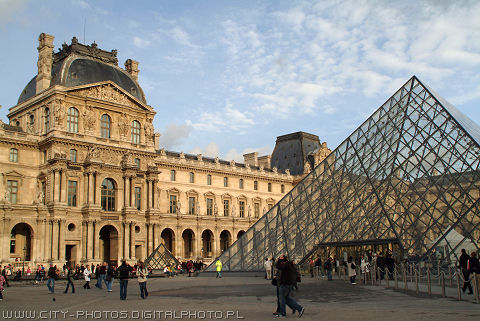
The Louvre in Paris, France is also a really great example of good design. The exterior of the building is so stunning and royal that you almost don't need to see the interior. The contrast between the very modern triangular arches and the old fashioned, cathedral like building is very interesting. They seem completely separate from each other, and yet they are connected. The interior of the building fills it's purpose fantastically. It protects the priceless pieces of artwork, while at the same time displaying them in a very visible way. As you walk through the building, you are lead very easily from artwork to artwork in a very bright, naturally illuminated environment. You never get bored or tired of walking through this building. 

(above image taken from http://world city-photos.org/paris/louvre_in_paris/pictures_of_the_louvre_in_paris.jpg)

Small vignettes from class (on my own)


Artifacts


Vignettes

In our drawing class we were assigned to draw three vignettes. One of our studio space, one of our rooms, and one of our choosing. We were then asked to experiment with watercolor and illuminate our drawings with color. These are my first attempts in my sketchbook at watercolor. We drew, as well as drew with, many different materials of our own for this project and created our own small depictions of who we are through our material possessions. These spaces that we've been asked to depict all represent spaces that at least attempt to full fill the three main qualities of good design (commodity, firmness, and delight.)


Monday, 2 February 2009

My Artifact

My artifact was a flower made out of several pieces of blue sweatpant material stitched together in a way that resembles quilting. I decided to make my artifact in a way that a person might make a quilt because my artifact represents a story, the willow wren, and quilts have been used for many years to tell stories.
The blue color of the sweatpant material that my flower was constructed out of represents the night. In my story night becomes a big component towards the end. The story's main point was to be accountable for your own actions and therefore i made a flower because to me a flower represents everything simple, sweet, and good in life, and corresponds well with "owning up to your actions."

Wednesday, 28 January 2009

History of Architecture

This class tied back into our weekly prompt very easily. The words this week were story, multi-view, artifact, translation, and cycle. 
We spoke of the cycles of building design. How the building are perceived from many different vantage points, many different views, the story, or meaning behind each building, and how those meanings change over time.
Each building is made at a certain point in time to have commodity, delight, and craft. But as time passes the commodity, or way the building is used, changes, therefore you need to be able to design something than is multi purposed. We also spoke of how a building is perceived at the time it is built. And how the  perception of, or meaning behind, that building may change over time. For example the world trade center was once a building that represented world unity. It was a building where people from all over come and work together for change. But after september 11, 2001 the buildings are now representational of a very important, and devastating point in american history. 
The story behind the world trade centers has changed completely. It is now an artifact that represents an attack on our country. 
We also spoke in class about the meaning, or feeling, that we try to portrey as designers and what the actual outcome is. We spoke of how our designs translate person to person, and how it changes continuously over time.


"In architecture, as in all operative arts, the end must direct the operation. The end is to build well. Well building hath three conditions: commodity, firmness and delight." - Sir Henry Wotton

"Great Nations write their autobiographies in three manuscripts- The book of their deeds, The book of their words, and the book of their art. Not one of these books can be understood unless we read the other two; but of the three, the only quite trustworthy one is the last." - John Ruskin

The definition of Stories:
"The account or recital of an event, or a series of events, either true or fictitious." -Wikipedia
 
The definition of Artifacts:
"In archaeology, an artifact or artefact is any object made or modified by human culture" -Wikipedia

The definition of Translation:
"Translation is the interpreting of the meaning of a text and the subsequent production of an equivalent text, likewise called a "translation," that communicates the same message in another language." -Wikipedia


The Willow Wren

My fairytale was the willow wren. From this fairytale i would say that the main point is to be responsible for your actions. There are many aspects of this story that support this moral. For example, the owl who is asked to guard the winner of the competition for bird king fails, and the winner escapes. The owl is then shamed and hides. From then on he only comes out under the cover of night. 
In a more literal sense the story gives reason behind the actions of the birds we see today. It tells of why birds sing, and what they are singing. It explains why owls only come out at night and hunt mice. And it explains many other aspects of their everyday behavior as well.