Showing posts with label IAR221. Show all posts

Wednesday, 6 May 2009

Explorations

(Image taken from: http://www.jazzguitarzone.com/jazzcity.jpg)

Music is one of my passions, and i think that a lot of creativity or thought stems from it. The guitar is one of my favorite instruments and takes a lot of precision and craft to make. 


(Image taken from: http://www.drivesafenv.com/images/bicycle_yellow.png)
The bicycle is not only a very functional design, but it is very earth friendly and a fast way to get around, and keep healthy.
(Image taken from: http://www.analogartsensemble.net/blog/rubberband.jpg)
The rubber band is also one of my favorite designs. Not only does it help when you haven't had enough time to do your hair, especially in this major. 


This house not only holds so many fond memories for me but it's location is perfect, two blocks from the southern jersey shore, and walking distance from every shop on the island. It is extremely functional, even for a family of seven. 

(Image taken from: http://www.salotteries.com.au/library/Telephone-results.jpg)
A telephone is one design, or invention that has developed over time. It started out large and difficult to maneuver, but it is now small enough to fit in your pocket and works without buttons.  It's incredible to think of how things develop. 


(Image taken from:http://www.notonthehighstreet.com/uploads/partners/Papilio/500/1685_pair_of_ceramic_door_knobs_in_
What did people do before there were doorknobs? Door's would not latch. They would stand open. YOu would have to prop something against them in order for them to stay shut. 


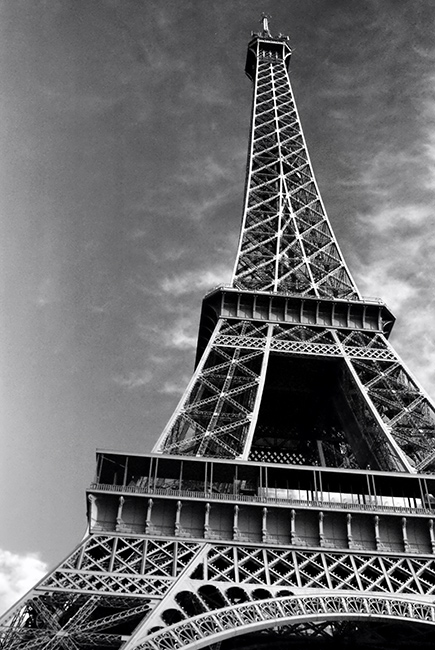
La Tour Eiffel is my favorite structure. A monument not only for France but for one of my fondest summers.


Although I don't get to see mine very often, being an I.Arc major, i think that a bed is my favorite thing. 

15380371_50_b.jpg


Shoes are some of my favorite items of clothing. They say a lot about the people wearing them. 

Surfboards are great designs as well, they have to be a certain form in order to cut through the wave, and almost like an upside down ship they have fins that allow them to move steadily down the wave. 

Monday, 20 April 2009

Peer Compare/Contrast


When looking at the photos above you can see an obvious similarity in the way that they seem to defy gravity in the way that the gradually grow larger as the grow vertically.  Even though they have a strong similarity in their exterior forms they were built for two completely different purposes. The top most image is an art museum in New York City, and the bottom image is a Harvard dorm. 
What interested me most about comparing these two buildings is the fact that they're very similar, and very different at the same time. The different architects used a similar design to house two totally different functions. This design does not strike me as one that applies to many purposes or places. 
Both of these buildings are completely different from their surrounding buildings. They are both made from different materials, and take completely unique forms. These difference separate them from their surrounding space. This works to an advantage for the Whitney Art Museum, but although the Harvard dorm is refreshingly interesting for a college dorm i would imagine the designer would want to create a sense of unity throughout the campus. 
The differences between these buildings doesn't stop at their interior function, they are also made out of different materials. The Whitney museum is made from concrete and the Harvard dorm is brick. Both of these materials have the structural integrity to support such a shape or form, but they clash with the surrounding materials. 


Thursday, 16 April 2009

REFLECTIONS

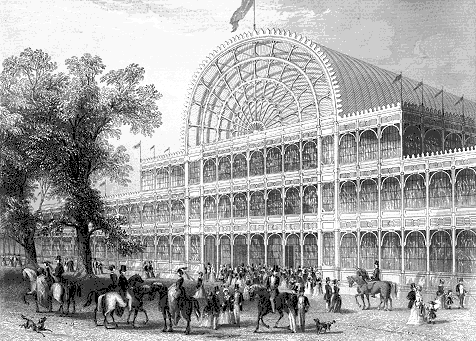
(Image taken from http://upload.wikimedia.org/wikipedia/commons/f/f0/Crystal_Palace.PNG)

In this unit we explored the use of new materials. Glass and Iron started to be used more abundantly to build Skyscrapers and other revolutionary structures. There was a conflict between the use of machine and handcrafted work at this point. People were surprised and upset at how detailed and well crafted machine made products could be.
There was a competition between France and England to see who could use cast iron in a more detailed way to create immense structures. This change in material signaled a change in societal views. By using Glass and Iron it enhanced the ease of construction, it repelled disease and led to more scientific development. Glass also had the advantage of creating the feeling of being outside when you're actually inside. Blurring the lines of Interior and Exterior. 
An example of this revolutionary building technique was the Crystal Palace in London, England. (depicted above)  The Crystal Palace housed the exposition of materials brought back from new places. The entire temporary building was constructed within nine months by Joseph Paxton. Another unique feature of this building is that it was constructed around existing plants and trees which fuzzes the boundaries between interior and exterior.
The Gothic revival was very prevalent with a many architects as well. It held an ideal vision for the past and emulated old styles of architecture.
The nineteenth century was a time of rapid change, development of one's country, declaring political power, and political growth. Rural places became more urban. Public places were more detailed and elegant making a step towards blurring the lines of wealth or power.

Wednesday, 8 April 2009

Precedent Analysis Draft

The Whitney Art Museum is named after the founder, Gertrude Vanderbilt Whitney, who was, herself, a well-regarded sculptor and art collector. Before founding this museum Gertrude Whitney started an organization called the “Whitney Studio Club.” The Whitney Studio Club was an exhibition space, which she created to display the works of avant-garde and unrecognized American artists. The Whitney art museum is said to house one of the most important collections of twentieth century American art. The Whitney’s permanent collection holds 1800 pieces of work in a large variety of media.

The current building in which the Whitney art collection is located was designed by Marcel Breuer in 1963-66. Breuer studied and taught at the Bauhaus in the 1920s, which focused on a combination of art and technology. Eventually Breuer became the head of the school's cabinet-making shop. He then moved to Berlin and started designing houses and commercial spaces, as well as some furniture pieces. Some of the furniture he designed is still in production today.

In the 1930s Breuer relocated to London because of Nazi conflict in Germany. In London, Breuer was employed at the Isokon company. The Isokon company was one of the first to introduce modern design into the United Kingdom. Here Breuer designed his Long Chair as well as experimenting with bent and formed plywood. He eventually to the United States and taught at Harvard's architecture school

Breuer established his own firm in New York. “The Geller House I of 1945 is the first to employ Breuer's concept of the 'binuclear' house, with separate wings for the bedrooms and for the living / dining / kitchen area, separated by an entry hall, and with the distinctive 'butterfly' roof (two opposing roof surfaces sloping towards the middle, centrally drained) that became part of the popular modernist style vocabulary.”

The Whitney art museum is now at it’s third location in the past thirty-five years. This location is an art gallery district in NY. Because the building was chosen to house changing exhibitions rather than a permanent collection the structure of the building had to have certain qualities so that it could morph to the needs of the different pieces of artwork. In order to do this three of its floors have open gallery spaces. The ceilings are suspended precast concrete open grid ceilings made to accommodate movable wall panels and lighting that can change depending on the needs of each art piece.

The Whitney art museum has been put in the category of brutalism and is also considered a modern piece. “The line between brutalism and ordinary modernism is not always clear since concrete buildings are so common and run the entire spectrum of modern styles. Designs which embrace the roughness of concrete or the heavy simplicity of its natural forms are considered brutalist. Other materials including brick and glass can be used in brutalism if they contribute to a block-like effect similar the strongly articulated concrete forms of early brutalism.” “Brutalism is a French term used to describe buildings that are heavy and unrefined with coarsely molded surfaces, usually exposed concrete. They tend to be crude and block shaped.” Modernism is an art form that “aims to break with classical and traditional forms.” Although there is a distinction between these two art forms they have many similar characteristics. There is much overlapping between the two. For example, by having heavy unrefined surfaces such as exposed concrete the building is breaking away from classical forms, so it fulfills both Modernism and Brutalism.

The Whitney Museum of Art is very modern because of it’s extremely unique shape. Breuer broke away from everything else he knew and created a shape that broke away from anything traditional. He did not choose, however, to break away from the idea of exposed concrete or stone that resembles the materials of the surrounding buildings.

The structural integrity of the building is unconvincing from the exterior because of how it extends further horizontally as the building raises. This structure is known as an inverted pyramid. This relates this building back to the ancient architecture of the pyramids. The building also achieves a completely modern look while maintaining an ancient structure. The building seems to levitate, and defy gravity. This was Breuer’s solution to having to work with a large program in such a small space.


http://www.greatbuildings.com/buildings/Whitney_Museum.html

http://en.wikipedia.org/wiki/Whitney_Museum_of_American_Art

Thursday, 26 March 2009

ALTERNATIVES

In the alternatives unit we talked about testing the boundaries and breaking the rules. A lot of this talk revolved around renaissance. The renaissance was a time of change in many different aspects. In the renaissance new buildings were designed using new materials and new mechanical devices. 
Designers such as Michealangelo pushed boundaries and made many changes that stuck with the design that is produced today. A good example of the transition into the renaissance is the Pazzi chapel in florence. The Pazzi chapel stayed close to it's roman routes, it has a porch, court, and hearth structure, and a dome supported by a pendentive but it also has many different altercations that separate it from previous designs.
In the new sacristy at St. Lorenzo, Michealengelo produced a more fluid feel. He broke the rules. Michealangelo changed the statues so that they projected from the walls and made it seem as though the entire building rushed upward in height.  This is a common theme for Michealangelo to take standard pieces of architecture and change their scale into something much larger. For example the columns rise two or three stories instead of one. 
  In the Laurentine Library we see the vestibule with its stars and walls. The stars represent rising to the occasion, being lifted up, and an achievement, or knowledge being gained. One of the most unique features of the laurentine library is that the columns are pushed back into the walls while still being visible, which contributes to the fluidity of the new renaissance ideals. 
In the St. Pietro space becomes much more regular and public. Uniform shapes are used and interior detail is used in the exterior. It's like a set design and the world is the stage. 
In the Baldacchino movement is created through the stone formation and columns have surface detail.
In the renaissance people started to focus more on landscape gardening, and planning in the renaissance. This was a french idealism. This focus on the landscape showed wealth. These landscapes stretched long distances, they included very detailed and gorgeous statues for lavish enjoyment, and included fountains all throughout a very wide open space. 
  The renaissance changed many things. Instead of continuing on the design principles already in place the architects of the renaissance changed things to be more fluid and uplifting. Details were enlarged, hidden, and more detailed in order to obtain this uplifting fluidity. 
In all design we need to understand and consider alternatives. We must always be thinking outside of the box. Even by changing some small detail in a standard design we make it stand out from the others. In order to be successful we must draw from previous designs and then create something completely unique. 

Thursday, 19 March 2009

Marcel Breuer Whitney Museum


(Image taken from: http://www.new-york-city-museums.com/the-whitney-museum.jpg)


The Whitney Museum of American Art in New York, New York was designed by Marcel Breuer in 1966. Marcel Breuer is a Hungarian designer who studied in Berlin and made his mark. The Whitney Museum, one of his more famous designs, is located on the southeast corner of Madison Avenue and 75th Street where most buildings are made of limestone, brownstone, or brick. Because of its very modern style in such a drab location this building stands out, not only physically, but visually. Your eyes are drawn to its unique exterior.
I chose this building for this reason exactly. I have been through this area of New York i remember noticing how different this building was compared to all the buildings around it. I have also chosen this building because within the next few weeks i may actually be able to visit New York, and go into this museum. 


OUTLINE:

I. Introduction of the founder
A. Background in art
a. Proficient in sculpting
B. Background in leadership
a. Created several other foundations
II. Background of the architect
A. Where he studied
B. Other buildings he designed
III. Location
A. Surrounding buildings
a. The foundations they house
b. The materials they’re made out of
c. Amount of space provided
1. How the architect handles this
IV. Commodity
A. The vision the architect had for the space.
a. Inspiration
b. Manipulations from the initial inspiration
B. The functions the building needs to uphold
C. The materials the building is made of
a. Why he chose those materials
V. Firmness
A. The structure of the building
a. Upside down pyramid
b. Levitating appearance
B. How it compares to the surrounding buildings
VI. Delight
A. The unique exterior of the building.
B. How it compares to the buildings around it.
C. Brutalism versus Modernism
VII. Everything the building achieved
A. The art that it holds
B. Where it stands compared to the architects original vision

MATERIALS I WILL USE:
I will incorporate the color grey into my visual representation to capture the essence of the concrete in the building’s exterior. I will also include layering of the information, or drawings, to show the shape of the building. I will also use predominantly square or rectangular shapes in my presentation to show the block-like structure of the building itself.

FUN FACTS:

The Whitney art museum is said to house one of the most important collections of twentieth century American art. The Whitney’s permanent collection holds 1800 pieces of work in a large variety of media.

The museum is named after the founder, Gertrude Vanderbilt Whitney, who was, herself, a well-regarded sculptor and art collector. Before founding this museum Gertrude Whitney started an organization called the “Whitney Studio Club.” The Whitney Studio Club was an exhibition space, which she created to display the works of avant-garde and unrecognized American artists.

The Whitney art museum is now at it’s third location in the past thirty-five years. This location is an art gallery district in NY. Because the building was chosen to house changing exhibitions rather than a permanent collection the structure of the building had to have certain qualities so that it could morph to the needs of the different pieces of artwork. In order to do this three of its floors have open gallery spaces. The ceilings are suspended precast concrete open grid ceilings made to accommodate movable wall panels and lighting that can change depending on the needs of each art piece.

The Whitney art museum has been put in the category of brutalism and is also considered a modern piece. “Brutalism is a French term used to describe buildings that are heavy and unrefined with coarsely molded surfaces, usually exposed concrete. They tend to be crude and block shaped.”

The structural integrity of the building is unconvincing from the exterior because of how it extends further horizontally as the building raises. This structure is known as an inverted pyramid. This relates this building back to the ancient architecture of the pyramids. The building also achieves a completely modern look while maintaining an ancient structure. The building seems to levitate, and defy gravity. This was Breuer’s solution to having to work with a large program in such a small space.

In this essay I will explore the distinction between modernism and brutalism.
“The line between brutalism and ordinary modernism is not always clear since concrete buildings are so common and run the entire spectrum of modern styles. Designs which embrace the roughness of concrete or the heavy simplicity of its natural forms are considered brutalist. Other materials including brick and glass can be used in brutalism if they contribute to a block-like effect similar the the strongly articulated concrete forms of early brutalism.”

http://www.greatbuildings.com/buildings/Whitney_Museum.html

http://en.wikipedia.org/wiki/Whitney_Museum_of_American_Art

Thursday, 5 March 2009

Walt Disney Concert Hall

For my building project i have chosen the Walt Disney Concert hall, located in downtown Los Angeles, California. This structure, built by Frank Gehry, opened on October 23, 2003. Because this hall had to meet sonic expectations it took a lot of time to complete. Construction on this building began in 1996 and the groundbreaking ceremony was held in 1999. Even after these three years Frank Gehry took more time to perfect the sound quality of the concert hall and the entire building was complete in 2003. 
Initially when researching twenty first century architecture i chose this building because of its connection to Walt Disney. But after researching further I chose this building because of its extremely unique structure. The exterior of this building looks more like a sculpture than a building. It is visually interesting and appealing, it serves several different functions and, it is structurally sound. 
I am very enthusiastic about this project and to learn more about this building and how it was designed and built. 


(Image taken from http://upload.wikimedia.org/wikipedia/en/d/d6/WaltDisneyConcertHall.jpeg)

Thursday, 26 February 2009

UNIT SUMMARY

“In architecture, as in all operative arts, the end must direct the operation. The end is to build well. Well building hath three conditions: Commodity Firmness and Delight.”- Sir Henry Wotton
One of the main themes that we’ve discussed in our first unit is commodity, firmness, and delight. Which is the idea that all architectural design should serve a specific function, or multiple functions; that a building should be able to stand the wear and tare of time and that it should be visually appealing. This theme opened my view of architecture. When exploring this idea more we talked about the difference between art and architecture, and came up with the most understandable comparison between the two that I’ve ever known. Art fulfills only firmness and delight, meaning it stands the test of time and is visually appealing, but serves no function, while architecture serves all three. What I found most interesting about this theme was how the function we need a space to serve, and what we consider to be visually appealing changes over time. So a structure must be able to morph to different serve several different functions.
When speaking of commodity, firmness, and delight we talked about Stonehenge. Stonehenge is most certainly visually appealing and has lasted many, many years, but its function is unknown to us. Many believe it to act as a calendar, or time telling machine of some sort. Its circular formation draws a person to its center. It is also built in such a large scale that some people think it was mean to be viewed from the heavens.

(Image below taken from http://www.sawse.com/wp-content/uploads/2008/08/stonehenge.jpg) We also talked about the six distinguishing features of architecture. Which are: interior versus exterior, third dimension, fourth dimension (time), light as the primary medium, color and materials, and furnishings. Going along with this theme we talked about how all of these components have to intertwine and work together to make a whole.
These themes allow me to see more clearly what standards my designs must meet in order to be successful. My thought process for everything that I design has expanded to something much more detailed and refined since I’ve thought more about what criteria they will need to meet in real life.
When moving along the lines of commodity, firmness, and delight we considered whether or not these words mean the same things across the world. Is what we consider to be beautiful deemed beautiful in other countries? What changes? With this we switched our focus to Roman versus Greek architecture. In Greece the architecture was based off of the surroundings, which was largely water. It was the search to make the ideal into reality. They wanted their central city to be the greatest. In Rome, with the acropolis in Athens the Romans created a building that was so monumental to all other architecture after it. The Parthenon held so many functions, such as commerce, speeches, and a gathering place for people from all around. The proportions of all the buildings created in Greece and Rome stemmed from the diameter of the columns inside and outside of the building.
These Roman and Greek buildings all perfected the idea of leading the viewers through the space, clarifying you for entrance through the porch to the more common area called the court, and then if you were worthy enough you went to the hearth. The hearth was deemed a very privileged place to be, all the most detailed and refined architecture and landscaping was there for people to see.
For me commodity, firmness, and delight were the most profound and interesting themes that I’ve learned. It really clarified to me exactly what architecture, or design in general must be to be successful.

Thursday, 19 February 2009

Grand Central Terminal


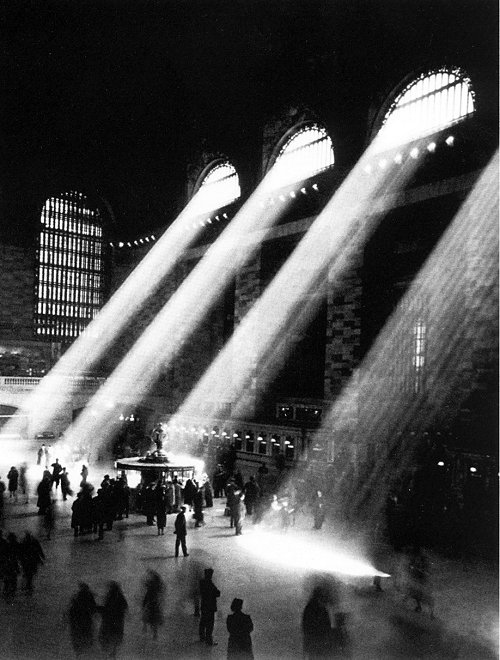
(Image taken from http://www.afterimagegallery.com/nytgrandcentral.jpg)

Grand Central Terminal, or Grand central station is on 42nd Street and Park avenue in Midtown Manhattan in New York City.
 Grand Central Station was deconstructed, and reconstructed between the years 1903 and 1913, and in 1913 it reopened to the public. It was built by, and named for, the New York City railroad. With 44 platforms, and 67 tracks along them this building is the largest train station in the world by number of platforms. 
The station was built into two separate levels, the top level has 41 tracks and the bottom layer has 26 tracks. There is more construction happening on the building and when it re-opens there will be a total of 75 tracks and 48 platforms.
I chose this twentieth century building because it's in my home state. I associate everything from NYC to my older brother and sister who live in Park Slope Brooklyn. The last time I visited them we went to Grand Central "Station" and I was completely entranced with its grand open spaces. I am so excited about the reoccurring expansion and development. After doing some research I was able to find the layout of the building and I cannot wait to delve deeper into the buildings design.
I was initially drawn in by the interior of the building but I am confident that the architecture of the building will be just as amazing.


Wednesday, 28 January 2009

History of Architecture

This class tied back into our weekly prompt very easily. The words this week were story, multi-view, artifact, translation, and cycle. 
We spoke of the cycles of building design. How the building are perceived from many different vantage points, many different views, the story, or meaning behind each building, and how those meanings change over time.
Each building is made at a certain point in time to have commodity, delight, and craft. But as time passes the commodity, or way the building is used, changes, therefore you need to be able to design something than is multi purposed. We also spoke of how a building is perceived at the time it is built. And how the  perception of, or meaning behind, that building may change over time. For example the world trade center was once a building that represented world unity. It was a building where people from all over come and work together for change. But after september 11, 2001 the buildings are now representational of a very important, and devastating point in american history. 
The story behind the world trade centers has changed completely. It is now an artifact that represents an attack on our country. 
We also spoke in class about the meaning, or feeling, that we try to portrey as designers and what the actual outcome is. We spoke of how our designs translate person to person, and how it changes continuously over time.


"In architecture, as in all operative arts, the end must direct the operation. The end is to build well. Well building hath three conditions: commodity, firmness and delight." - Sir Henry Wotton

"Great Nations write their autobiographies in three manuscripts- The book of their deeds, The book of their words, and the book of their art. Not one of these books can be understood unless we read the other two; but of the three, the only quite trustworthy one is the last." - John Ruskin

The definition of Stories:
"The account or recital of an event, or a series of events, either true or fictitious." -Wikipedia
 
The definition of Artifacts:
"In archaeology, an artifact or artefact is any object made or modified by human culture" -Wikipedia

The definition of Translation:
"Translation is the interpreting of the meaning of a text and the subsequent production of an equivalent text, likewise called a "translation," that communicates the same message in another language." -Wikipedia


Timeline

650 b.c.


Governance:

-          The Messenians revolted against their Spartan rulers.

-          Beginning of the second Messenian war.

-          The town of Abdera was founded in Thrace by colonists from clazomena.

-           Babylonia under the rule of Shamash-shuma-ukin rises in revolt against the Assyrians

-           The first pyramid of the Teotihuacan culture was built in Cholula.

       Cypselus becomes the first tyrant of Corinth

-           Zhou Xiang Wang becomes King of the Zhou dynasty of China.

-          In Greece it was the age of the tyrants.

-          The Chinese licensed lady lovers. This is considered as the 1st example of legalized prostitution.


Technology:

-          Ancient Greeks started using large diameter punches to imprint images and designs onto coins and tokens.

-          Evidence of writing systems appear is Oaxaca

-          Duns and Brochs first use in Scotland

-          Iron tools being produced


Commerce:

-          Greece began using the drachma for currency.

-          Jade artifacts are traded in as far as southern central America


Institutions:

-          Ball courts, used in ball game of central American civilizations, found in Olmec centuries

-          Peraca culture develops in south Peru

-          Ceremonial complex built in Chiripa, Lake Titicaca

-          Hillforts begin to be constructed in the southwest


650 a.d.


Governance:

-          An early Mayan classic temple in Copan was closed and covered.

-          Ritual items of flint knives and stingray spines was later discovered.

-          Civil strife occurred during this time, which followed about 30 years of drought. This led to the demise of the Moche civilization.

-          The Khazars’ aggressive territorial expansion drove some Bulgars westward.

-          The Bulgars soon founded a kingdom in the southeastern Balkans that is now known as Bulgaria.    

-          In Mexico the Teotihuacan culture began declining.

-          Arabs introduced Islam to Afghanistan.

-          A Saxon monk founded St. Botolph’s Town in England.

-          Japanese emperor Kotoku unites Japan and issues Taika Reform Edicts.

-          Byzantine empire retakes alexandria


Technology:

-          Construction on the Dome of the Rock begins

-          First Shinto shrines built in Japan

-          Kallikinos invents Greek fire in Constantinople


Commerce:

-          Traders from Arabia established Islamic settlements on the coast


Institutions:

-          Buddhism reaches Tibet

-          Buddhism replaced by Confucianism as a state religion in Japan.

-          Mosque built in Kerala

-          Monastery built on the isle of Lindisfame

-          Pope Martin I is arrested by the exarch and taken to Constantinople

-          Slavs establish established independent bohemian kingdom

-          Hawaii islands are colonized from the Marquesas islands

-          Kingdom of Nobatia is incorporated into Makuria