Wednesday, 4 February 2009

Week 2

Commodity, Firmness, Delight, Idiom, Illuminate, and Material
For every building that is made, for every piece of artwork that is made, and for almost
 every aspect of one's life we must take into account commodity, firmness, and delight. We need to realize how a decision is going to make us feel, what its outcome is going to be, and how permanent it is. 
First we must understand that these three components belong together, one cannot continue to exist without the other two.
In architecture, we need to understand the purpose for which the building was, or is being made. What purpose it is made to serve. After that we need to try and make it so that the building may be altered to serve many purposes while the needs of our culture shift over time. They need to be structurally sound so that weather does not greatly affect them, and so that our everyday activities have no impact on their structural activities as well. We need them to last, which is another reason why the building needs to be able to shift to accommodate many purposes, because our needs will change as time progresses. It is also important to experiment with how the building will make us feel. For example, the illumination of a building is very important; if there are not enough windows there is not enough natural light. Natural light is what keeps us, as humans, healthy and happy. When there is a lack of natural lighting the
 building feels cave like and cold. Along with all of this the buildings main priority is to direct
 it's inhabitants. For example, in a cafeteria there are aisles of food that each person moves through to choose the food they want to eat, this space is usually cramped and uncomfortable so that each person moves through quickly, then they proceed to the space where they will eat, which is much more open and enjoyable. The ways these spaces are designed are very purposeful. The spaces that we design should make us healthy and happy, and make our everyday lives easier. 
Idiom, or figure of speech, is something in our culture that shifts over time as well. There are figures of speech that stick with us in our everyday dialogue and passed down through generations, and some that can come and go. Idioms are sometimes considered the raw materials of language. In history we spoke about how idioms are both additive, and subtractive, in that they can embellish on, or take away from, our history and our dialogue. 

Illuminate, meaning shedding light on something, can also be put in the less literal context of understanding. When something is understood, its point is illuminated, there is light shown upon it so that it can be seen clearly. History is the illumination of the past. From historical artifacts more of our past is understood, or illuminated. The things that are illuminated in our lives will change, and to different people different things will be illuminated.
The word material has many different meanings as well. For speech idioms can be considered the material of language. In building there are many different materials that can be used to make the building structurally sound and aesthetically pleasing and help it perform it's purpose. There are also many different materials that are needed to help illuminate, or understand our past, present, and future. The material we use in our lives will shift, as everything else in our lives shifts, and we will use them for different purposes or change the materials we use. 

Continuing on the consistent theme of cycle, the world cycles through so many different things. Different things will be illuminated. There will be different meanings behind commodity, firmness, and delight. And different buildings that represent these words. A good example to tie all of these words together is the Nile River in Egypt. We learned about it, it was illuminated to is, in our history of architecture class. It carries materials from place to place, for trade, and also contains materials for the natives to build homes and for other uses. It also fills all three of the main components. It serves several important functions, such as a water source, a place for trade, a division of the lands, and a home. It is such a large and consistent river, and it will last for thousands of years to come, and it is also very aesthetically pleasing. 
Everything in life can tie into these words. Any art form, any object, any place, and any thing. 
"As it was in the beginning, is now, and ever shall be, world without end." Roth p190


Tuesday, 3 February 2009

Images for materials

Raw materials, in any art form, are very important. They take the artwork in so many different directions. For architecture the materials out of which the building is made effect greatly how the building will be viewed. For example the Pyramids in egypt, or the great wall of china, are mad out of natural materials found in he surrounding areas. This makes for a structure that manipulates it's surroundings in such an effective way. If they were made out of other, different material they would not be as fantastic. 

"An effective relationship of building to earth is fundamental to architecture." -Stanley Abercrombie, Architecture As Art, 1984

Images for Idiom

In a linguistic sense, idioms are figures of speech, so i decided to depict a few of these figures of speech. A piece of cake, a drop of a hat, and racing against the clock.
 
" The architect...must be looked upon as something much more than a designer of buildings-lovely, elegant, charming, and efficient though they may be. His greater role is that of being the delineator, the definer, the engraver of the history of his time." - Eugene Raskin, Architecture and people, 1974

In architecture we talked about how idioms are not just speech related, but are physical things as well. For example stonehenge fulfills the qualities of an idiom as well, it is shared, it is passed down through generation and both additive and subtractive. 


Images for Illuminate

"Our eyes were made to see forms in light"- Le Corbusier, Towards a New Architecture, 1927

This image is a great example of the illuminated sky. A more natural illumination.  
(The above image is a picture i took at my beach in Avalon, NJ.) 

Images for Commodity, Firmness, and Delight

 "The basic elements of design described by Vitruvius have remained essentially unchanged since the time humans first began to shape their environment. Architecture, Vitruvius wrote, must provide utility, firmness, and beauty." "By utility, Vitruvius meant the functional arrangement of rooms and spaces so that there is no hindrance to use and so that a building is perfectly adjusted to its site. Firmness referred to foundations that were solid and to building materials being used wisely to do their required work. Beauty meant that "the appearance of the work is pleasing and in good taste, and its members are in due proportion according to correct principles of symmetry."" - Roth p11

The two images below represent two structures that fulfill perfectly the qualities of commodity, firmness, and delight. Stonehenge, discovered thousands of years ago, has many different and possible reasons behind it. There are some people who believe that stonehenge was built to keep track of time. From the position of the sun an stars you can keep track of the months, and the hours of the day. 
Because stonehenge is so large it is hard to understand why it would be so unless it was meant to be viewed from the heavens, which brings us into a more religious reason for the existence of stonehenge, or potentially the notion of space travel. 
It's circular formation also manipulates it's environment in a very interesting, and aesthetically pleasing way. Because it is located in a somewhat open space you are drawn directly to it. The blocks, which have all been severely weathered over time alongside tampered with, are all set into a circle. This cannot be by accident. Not only are you drawn directly to these immense rocks, but you are drawn to the center of the circle, which seems to connect you to the stones in a much more meaningful  way than if you were to walk around the outside of them. 


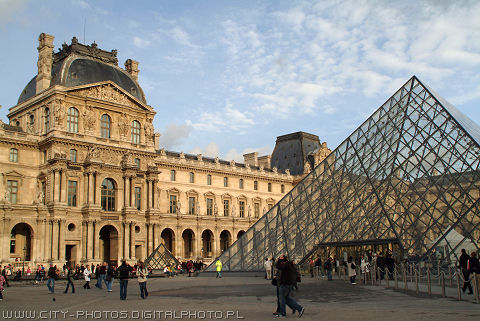
The Louvre in Paris, France is also a really great example of good design. The exterior of the building is so stunning and royal that you almost don't need to see the interior. The contrast between the very modern triangular arches and the old fashioned, cathedral like building is very interesting. They seem completely separate from each other, and yet they are connected. The interior of the building fills it's purpose fantastically. It protects the priceless pieces of artwork, while at the same time displaying them in a very visible way. As you walk through the building, you are lead very easily from artwork to artwork in a very bright, naturally illuminated environment. You never get bored or tired of walking through this building. 

(above image taken from http://world city-photos.org/paris/louvre_in_paris/pictures_of_the_louvre_in_paris.jpg)


Small vignettes from class (on my own)


Artifacts